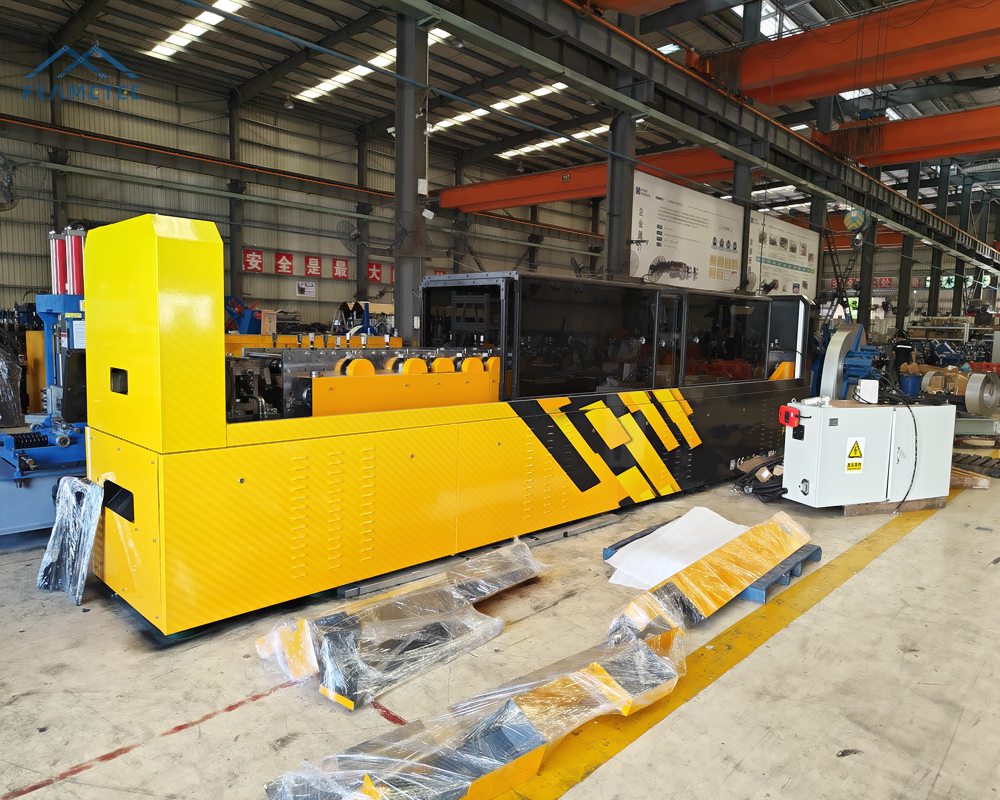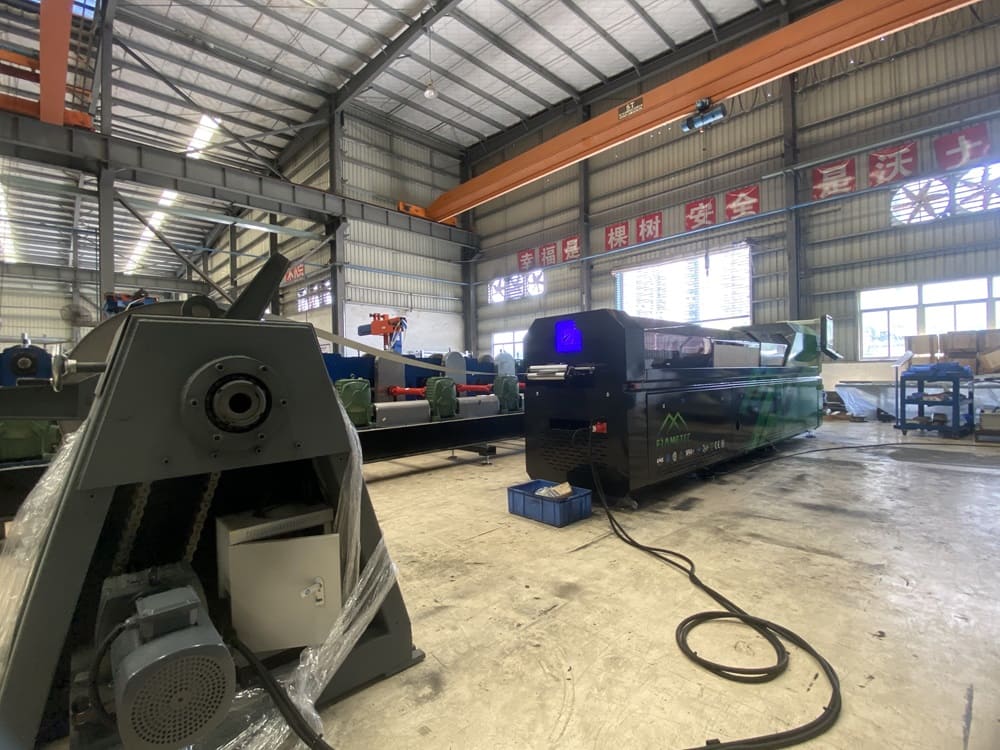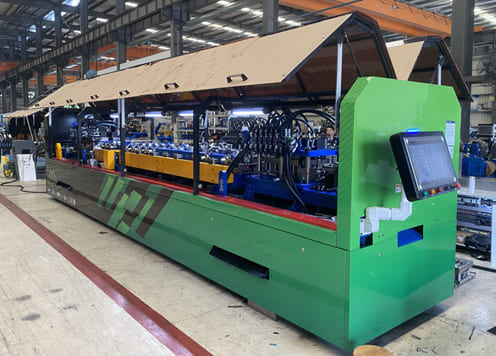
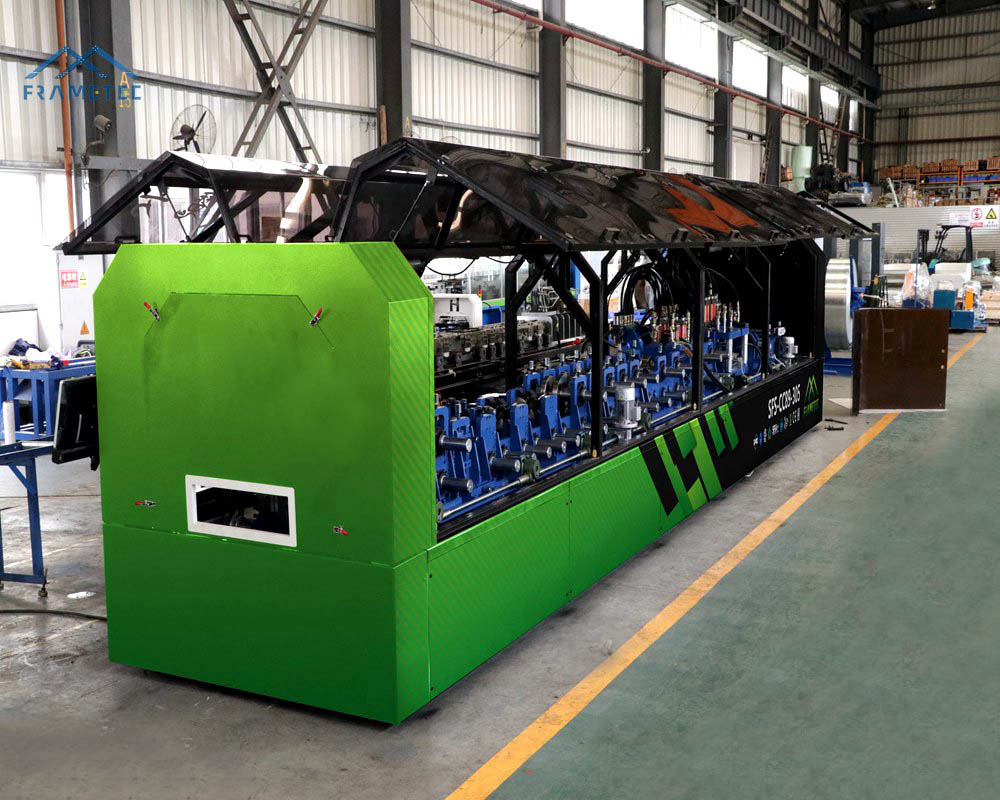
Not every framing business needs a heavy-duty system. In many residential or standard prefab projects, a regular light steel framing machine is fully adequate. However, there are situations where a heavy duty steel framing machine becomes the more suitable choice, not because it sounds more advanced, but because the project requirements genuinely demand stronger structural output. heavy duty multi profile LGS machine
For buyers evaluating machine options, the key question is not whether heavy-duty equipment is better in general. The real question is when it becomes necessary.
What Is a Heavy Duty Steel Framing Machine
A heavy-duty steel framing machine is designed for higher structural demand than a standard framing machine. It is usually associated with:
- thicker material processing
- stronger structural members
- wider application in residential and light commercial buildings
- support for walls, trusses, and joists under heavier design requirements
On Frametec, heavy-duty positioning is clearly visible in models such as SFS-CC150-450 and SFS-CC89-305, which are presented for wall frames, trusses, joists, residential and light commercial buildings, and in one case specifically up to 6-storey building applications. The published thickness ranges also extend beyond lighter standard framing capability.
Situations Where a Heavy Duty Machine Makes Sense
Multi-Storey Building Projects
Once a project moves beyond simple low-rise housing, framing demands often become more serious. Load requirements, structural stability, and member performance all increase. In this case, a heavy-duty machine may be necessary. up to 6 stories building heavy duty automatic LGSF machine
Light Commercial Buildings
Office buildings, small commercial blocks, and mixed-use low-rise structures often require stronger sections than basic residential framing. If your business serves this kind of market, a heavy-duty machine can give you more confidence in structural output.
Projects Using Thicker Gauge Steel
If the design system regularly requires thicker material, a standard machine may not be enough. A heavy-duty framing machine is more suitable because it is built around wider or stronger forming capacity.
Businesses Planning Structural Upgrading
Some businesses start with residential framing and later move toward more demanding projects. In such cases, choosing a heavy-duty machine can be a strategic move to avoid equipment limitations later.
When a Standard Machine Is Still the Better Choice
Heavy-duty machines are not automatically the best for every buyer.
For example, if your business mainly produces:
- simple residential wall frames
- standard villas
- repetitive low-load projects
- lighter gauge framing packages
then a standard or multi-profile light steel frame machine may be more practical. It may offer enough flexibility without introducing unnecessary capacity.
How to Decide Between Standard and Heavy Duty
The decision should be based on the actual target market.
Choose a heavy-duty machine if:
- you plan to serve larger or more structural projects
- you need stronger material capability
- you want to enter multi-storey or light commercial framing
- you want more structural coverage from one machine
Choose a standard machine if:
- your core market is simple residential housing
- the framing system is lighter and more repetitive
- you want efficient production without oversized capacity
Frametec’s Heavy Duty Direction
Frametec’s current lineup gives a clear indication of how heavy-duty framing is positioned. The SFS-CC150-450 is described around residential and light commercial use with 1.0 to 3.0 mm thickness capability, while the SFS-CU140-305T / MF300T and SFS-CC89-305 are associated with 1 to 6 storeys or up to 6-storey heavy-duty building application. That makes these pages useful internal landing targets whenever the article discusses larger structural scope. steel frame machine
Common Buyer Misunderstandings
A common misunderstanding is assuming that heavy-duty machines are always better simply because they are stronger. In reality, buying more capacity than your market needs can reduce efficiency.
Another misunderstanding is the opposite one: some buyers stay too long with lighter framing systems even when their order structure is already moving toward heavier structural work. That can create production limits at exactly the moment the business should be upgrading.
You should choose a heavy duty steel framing machine when your projects require more structural strength, thicker material capability, or broader application in residential and light commercial construction.
SFS-CC150-450T shipping to Canada
If your market is moving toward heavier, taller, or more load-sensitive structures, a heavy-duty system is not just an equipment upgrade. It is a production requirement.
FAQ
What is considered a heavy duty steel framing machine?
A heavy-duty machine is a framing system designed for stronger structural output, usually with wider application in walls, trusses, joists, thicker material processing, and more demanding project types.
When do I need a heavy duty framing machine instead of a standard machine?
You usually need one when your projects involve heavier structural demands, thicker steel, light commercial buildings, or multi-storey applications. If you mainly do simple residential wall framing, a standard machine may be enough.
Is a heavy duty machine necessary for villa production?
Not always. For many standard villa projects, a regular multi-profile machine is sufficient. A heavy-duty machine becomes more relevant when the villa structures are more demanding or when the business also serves heavier project categories.
Can a heavy duty machine produce wall frames and floor joists?
Yes, many heavy-duty systems are positioned to support wall frames, trusses, and joists together. Frametec’s heavy-duty machine pages describe that kind of broader structural coverage.
What thickness range usually indicates heavier structural capability?
That depends on the machine design, but once the machine is built to handle a broader and thicker range, it is generally more suitable for heavier framing applications. Frametec’s published heavy-duty pages include ranges extending to around 2.6 mm and 3.0 mm depending on model.
Is a heavy duty machine better for future expansion?
It can be, especially if the company plans to move into larger residential, modular, or light commercial projects. However, it should still be chosen based on realistic market direction rather than assumed prestige.
Are heavy duty machines only for large factories?
No. A mid-sized factory may also need a heavy-duty machine if its projects are structurally demanding. The decision depends more on application than on factory size alone.
What is the risk of choosing a machine that is too light for the target market?
The main risk is production limitation. The factory may not be able to support thicker material, higher loads, or broader project requirements when demand changes.