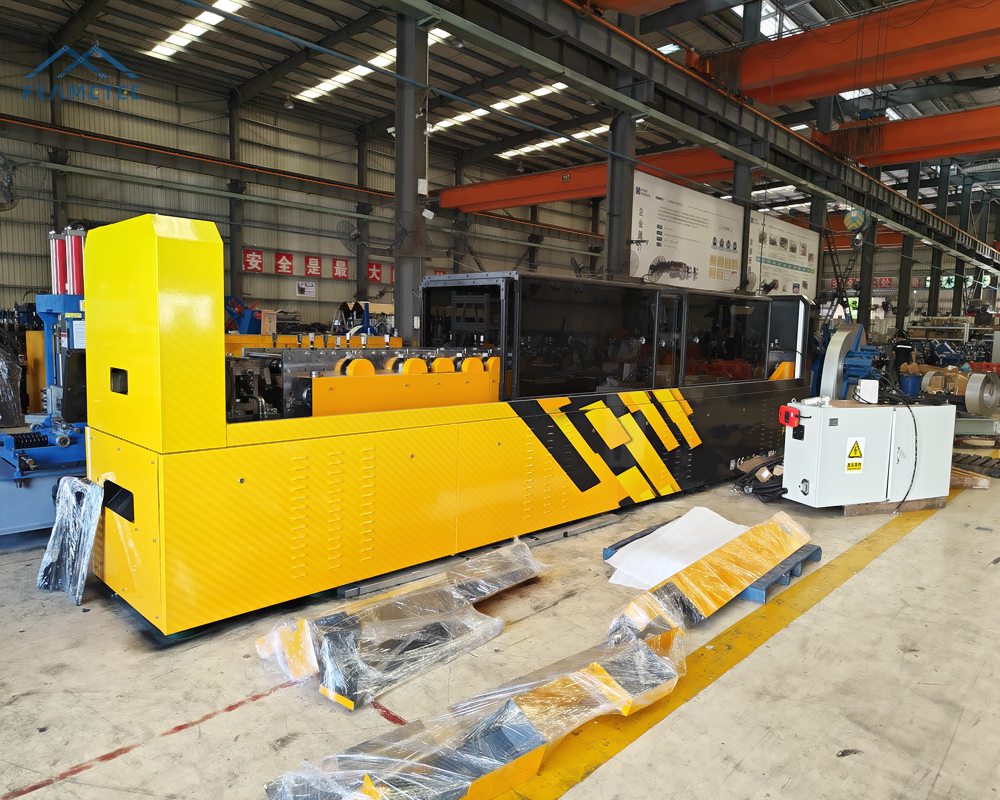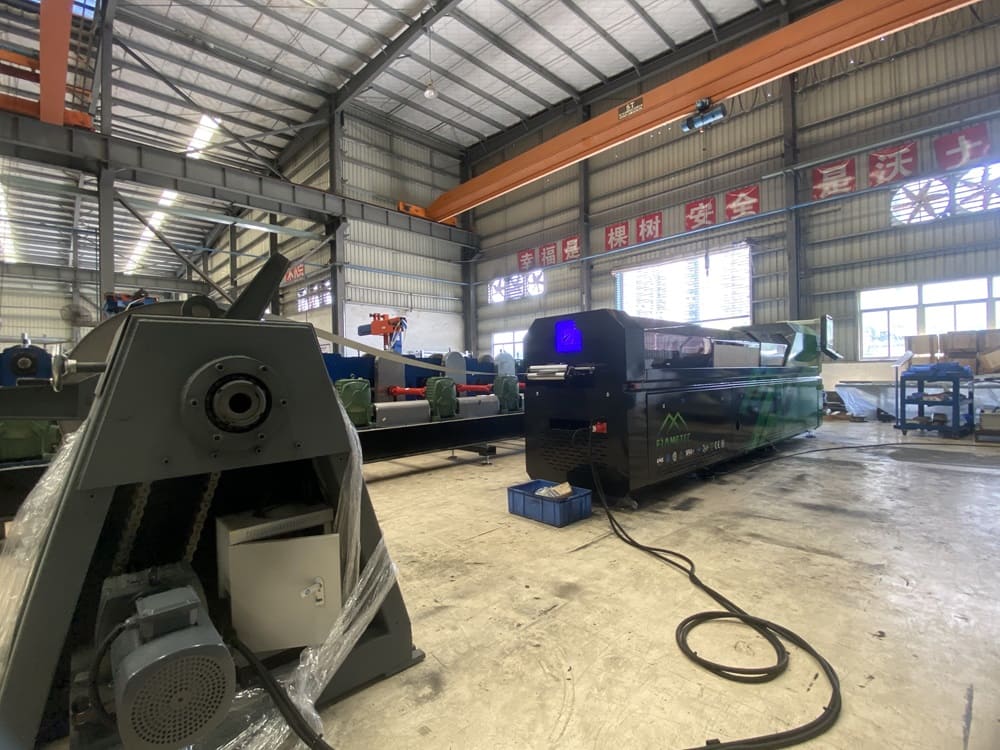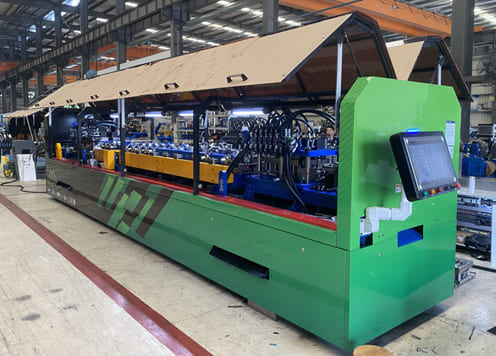
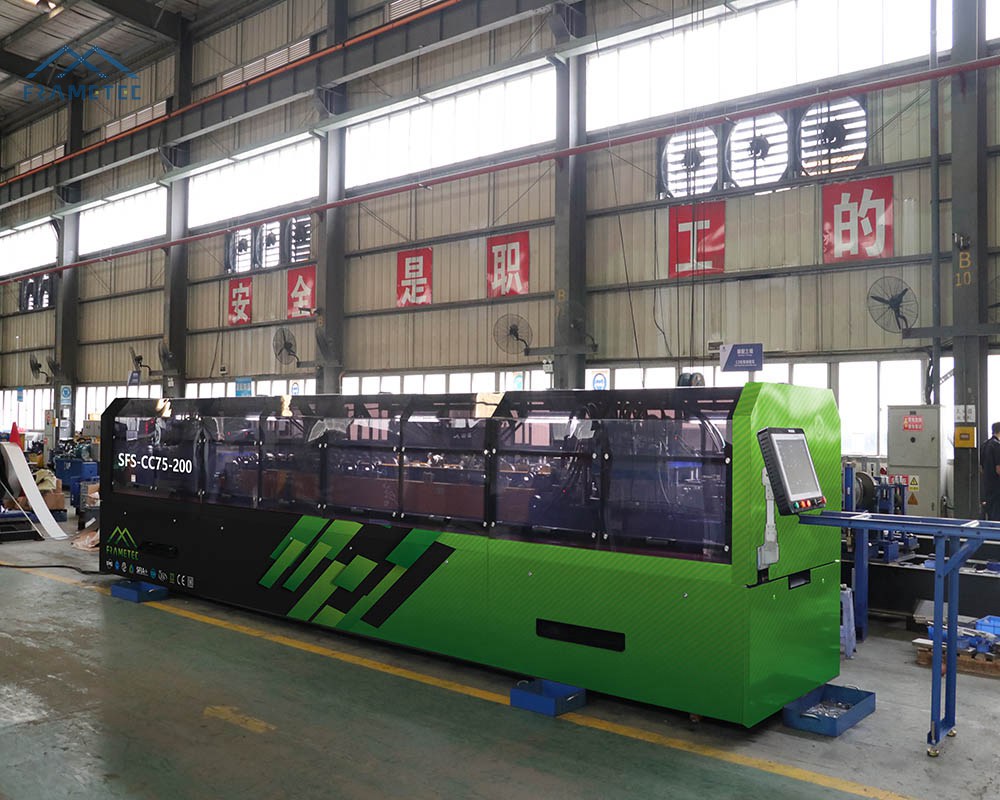
Modular house production requires more than fast roll forming. It requires a framing system that can support precision, repeatability, and coordinated off-site manufacturing. For this reason, the best light steel framing machine for modular house production is usually not the simplest machine, but the one that can support multiple structural needs within a stable production workflow.
In modular construction, framing components are manufactured in a factory environment and then assembled into modules or panelized units. That means the machine must do more than produce steel members. It must help the manufacturer keep dimensions consistent, reduce site correction, and support a smoother transition from design to production to assembly.
Why Modular House Production Needs a Different Machine Mindset
A factory producing modular houses does not operate like a traditional framing workshop. The business often has to manage:
- repeated module production
- different framing parts within one project
- coordination between wall, floor, and roof systems
- tighter installation tolerances
This is why modular manufacturers usually prefer machines with broader capability rather than single-output production.
What Makes a Machine Suitable for Modular House Production
Multi-Profile Capability
Modular house projects often need different profile sizes across walls, floor systems, roof sections, and connection areas. A machine with multi-profile capability gives the manufacturer greater flexibility and makes it easier to adapt to different module designs.
Stable and Repeatable Output
In modular production, repeatability matters as much as speed. If components vary from one batch to another, installation efficiency drops. A suitable machine should support consistent dimensions and stable forming quality.
Support for Off-Site Manufacturing Workflow
Off-site production depends on system coordination. The machine should fit into a workflow where structural design data is turned into production-ready framing output with minimal manual re-interpretation.
Capacity for More Than Wall Framing
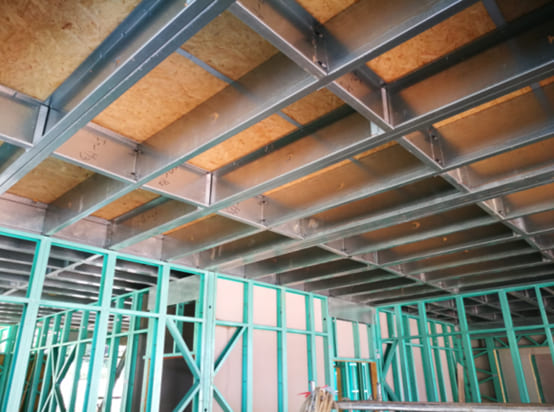
Some modular house manufacturers start with wall framing only, but many eventually need floor joists, trusses, or heavier structural members. A machine that supports broader application can help the business scale more efficiently.
What Type of Frametec Machine Fits This Need
For modular house production, Frametec’s machine lineup suggests several possible directions depending on the manufacturer’s scope.
A factory focusing on modular wall and floor framing may find strong relevance in machines such as the SFS-CU140-305, which is positioned as a wall and floor joist capable machine, or the SFS-CU200-350, which is dedicated to floor joist cassette manufacturing and modular floor systems. For manufacturers aiming at broader structural range, the SFS-CC75-250 and similar multi-size framing systems are also relevant because they are positioned for wall panel, roof truss, and floor joist output.
If the modular business handles more demanding structures or wants to prepare for higher-load applications, Frametec also presents heavy-duty options such as SFS-CC150-450 and SFS-CC89-305, which are described for wall frames, trusses, joists, residential, and light commercial building needs.
How to Choose the Best Machine for Your Modular House Business
The best machine depends on your production model.
If you mainly produce standard modular homes
A multi-profile light steel framing machine is usually the most practical choice because it supports multiple framing requirements without overcomplicating the system.
If you focus heavily on modular floor systems
A dedicated floor joist machine may be necessary, especially when cassette floors are central to your production line.
If you expect to expand into larger structures
A heavy-duty framing machine may be a better long-term investment because it supports stronger structural output and wider application coverage. heavy duty LGS machine
Common Mistakes Buyers Make
Some buyers choose a machine based only on one current project. That may work in the short term, but modular businesses often evolve quickly. A machine that only fits one framing configuration can become limiting.
Another mistake is underestimating the importance of floor systems. In modular housing, floor framing is often just as important as wall framing, especially when modules are produced in a factory and transported for installation.
The best light steel framing machine for modular house production is the one that supports a complete manufacturing logic: repeatable framing, flexibility across components, and compatibility with off-site construction methods.
For modular manufacturers, the right machine is not only a production tool. It becomes part of the business model itself.
FAQ
What is the best type of light steel framing machine for modular house production?
For most modular house manufacturers, a multi-profile light steel framing machine is the best starting point because it offers flexibility across different framing components. If the business has a strong focus on floor systems, a dedicated floor joist machine may also be needed.
Why is multi-profile capability important in modular housing?
Modular projects often include different structural elements within one production workflow. A multi-profile machine makes it easier to produce different sizes and sections without restricting the factory to one profile type.
Can one machine produce both wall framing and floor systems for modular homes?
Some Frametec machines are positioned for both wall and floor joist applications, while others are more specialized. Whether one machine is enough depends on the complexity of the modular product and the structural range required.
Is a floor joist machine necessary for modular house factories?
Not every factory needs one at the beginning, but for manufacturers producing modular floors or cassette systems, a dedicated floor joist machine can improve structural suitability and production efficiency. Frametec’s SFS-CU200-350 is explicitly described around modular floor system use.
Should modular house manufacturers choose a heavy-duty machine?
A heavy-duty machine is more suitable when the business handles larger load requirements, multi-storey structures, or broader residential and light commercial framing. For standard modular homes, a regular multi-profile framing machine is often sufficient.
What matters more for modular housing, speed or repeatability?
Both matter, but repeatability is usually more important. In modular production, components must fit into a coordinated assembly system, so dimensional consistency has a direct effect on installation quality and efficiency.
How should a buyer compare different machine options for modular housing?
The buyer should look at profile range, floor framing capability, structural flexibility, application range, and how well the machine matches the long-term production plan, not only the current order.
Can a modular house business start with one machine and expand later?
Yes. Many manufacturers begin with one machine focused on core framing output and then expand as production volume and project types increase. It is still wise to choose a system that does not limit future growth too early.