
The residential construction market is no longer limited to standardized wall framing. Manufacturers are increasingly expected to produce light gauge steel components for detached houses, steel villas, prefabricated homes, townhouses, and modular residential buildings. Each project may require different steel profile dimensions, connection details, structural layouts, and production schedules.
For manufacturers looking to expand their operations, a multi profile LGS machine provides an opportunity to move beyond repetitive framing production and serve a wider range of residential construction projects.
Unlike equipment designed around one fixed framing configuration, a multi profile light gauge steel framing machine can manufacture different compatible steel sections using a flexible production system. This capability can help factories broaden their customer base, handle more varied orders, and develop additional light steel framing products.
However, successful expansion requires more than purchasing an automatic steel framing machine. Manufacturers must understand how profile flexibility, engineering requirements, software integration, and production planning work together.
What Is a Multi Profile LGS Machine?
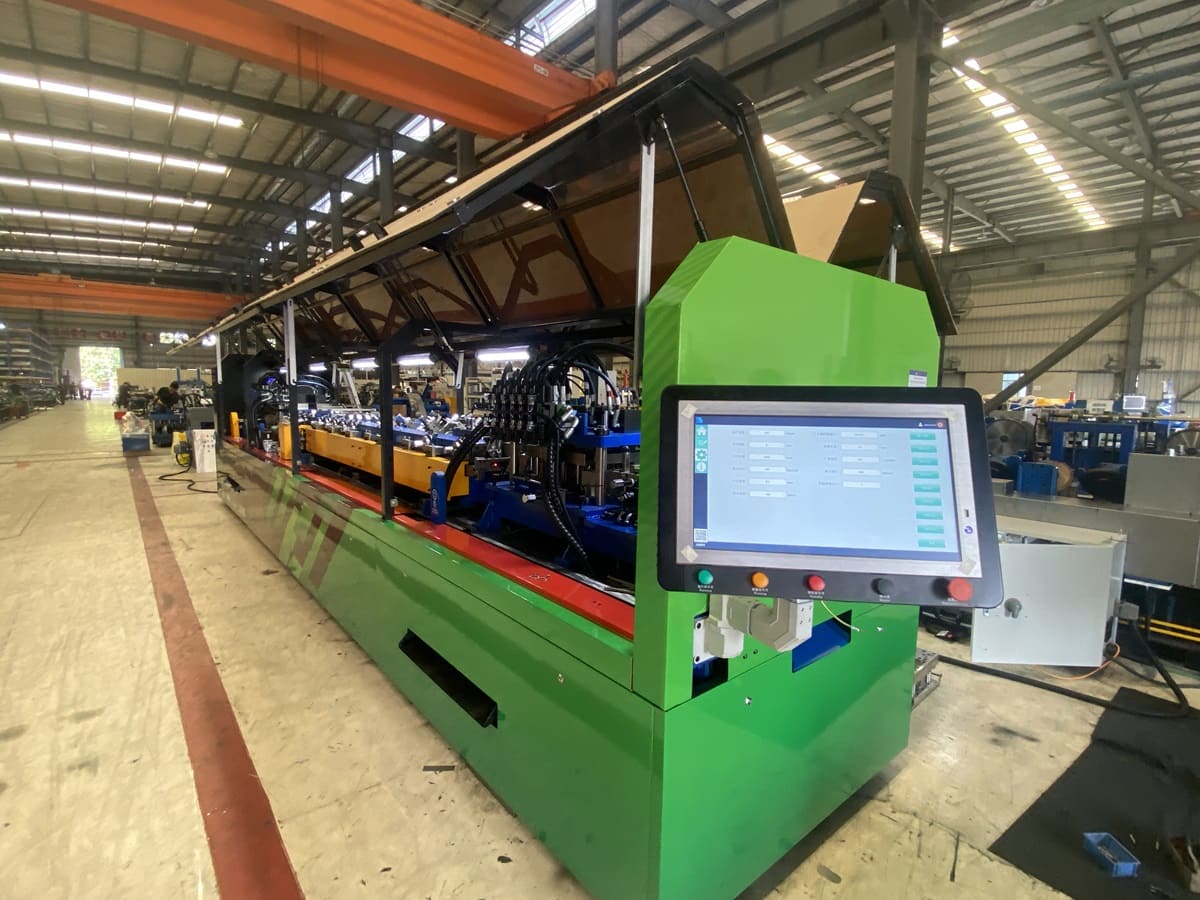
A multi profile LGS machine is an automated cold roll forming system designed to manufacture different light gauge steel profiles within a specified range of section sizes and material thicknesses.
Depending on its configuration, a multi profile steel framing machine may produce:
- C-shaped structural framing sections
- U-shaped track profiles
- Wall studs and framing members
- Roof truss components
- Floor framing sections
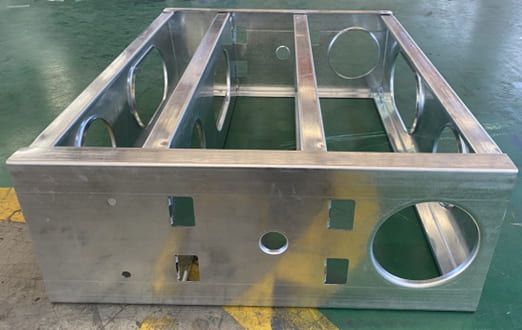
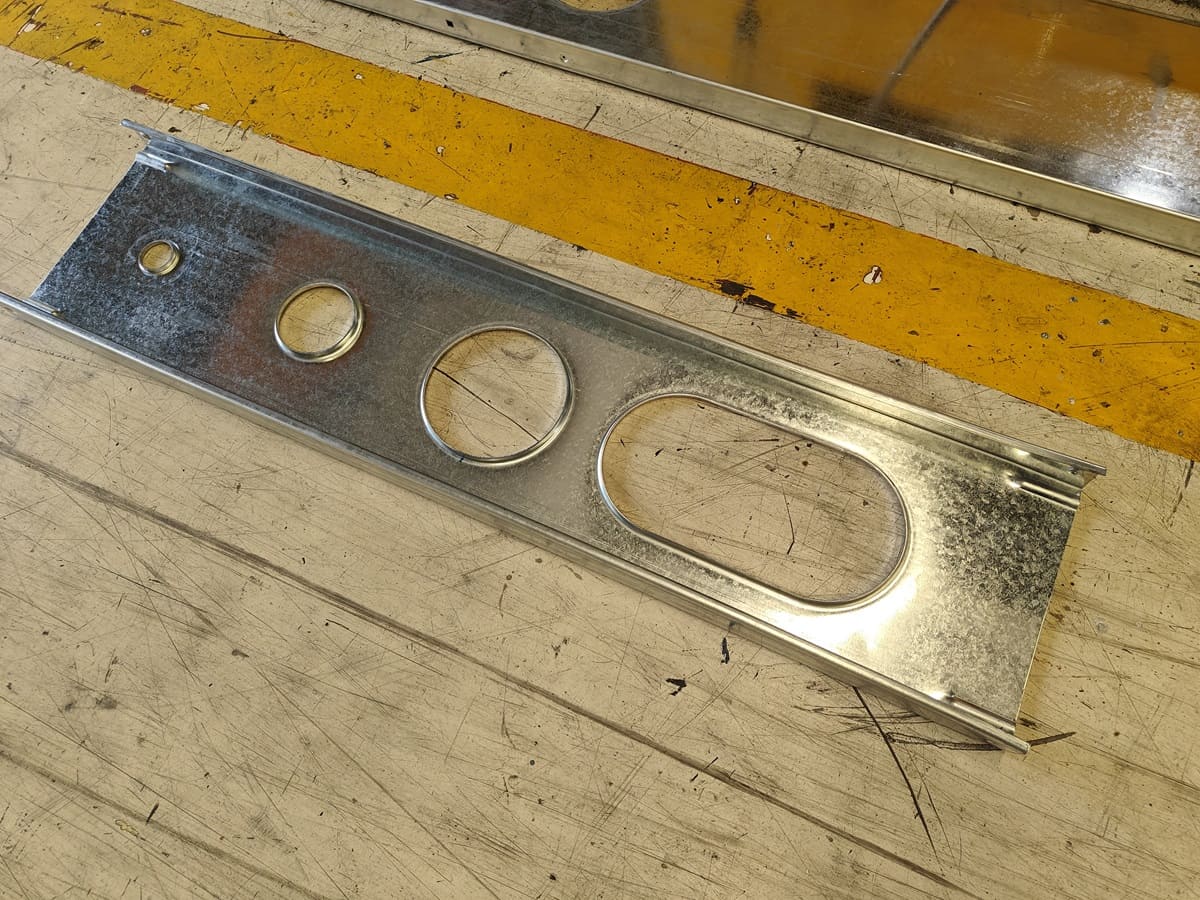
- Pre-punched steel framing components
- Members used in prefabricated and modular building systems
The actual range depends on the machine’s forming tooling, punching configuration, section geometry, and material capacity.
For example, Frametec’s SFS-CC75-200 multi profile steel frame machine is designed for CC and CU connection systems, with published section sizes from 75 to 200 mm and steel thicknesses from 0.75 to 1.6 mm.
For manufacturers requiring a wider section range, the SFS-CC75-250 automatic multi sizes light steel roll forming machine offers profile sizes from 75 to 250 mm.
These configurations give residential framing manufacturers different options depending on their intended product range.
Why Residential Framing Businesses Need Greater Profile Flexibility
Residential building designs vary significantly, even within the same construction market.
A manufacturer producing steel framing for one housing developer may encounter relatively standardized building layouts. Another customer may require custom villas, different wall thicknesses, alternative roof geometries, or modular structures.
This creates several production challenges.
Different Projects Require Different Steel Sections
A residential building may use relatively narrow steel framing sections for certain walls while requiring larger members for other engineered applications.
A factory equipped with a limited-profile machine may need additional equipment or outside suppliers to fulfill those requirements.
A suitable multi profile light steel frame machine can reduce these limitations by supporting several approved section dimensions within the same production platform.
Custom Housing Requires Production Adaptability
Custom villas and prefabricated homes frequently involve variations in wall layout, openings, and roof configuration.
A flexible steel villa framing machine allows manufacturers to respond to these differences while maintaining an organized production process.
Modular Building Production Requires Repeatability
Modular housing factories must produce multiple framing components consistently across repeated building units.
An automatic light gauge steel framing machine with suitable CNC production controls can help maintain repeatable member lengths, punching positions, and profile geometry.
Five Ways a Multi Profile Steel Framing Machine Can Expand Your Business
1. Enter Additional Residential Construction Segments
A factory initially supplying wall framing for small houses may eventually expand into townhouse developments, prefabricated villas, or modular housing.
A multi profile LGS machine can support this expansion when its section range and processing functions match the new projects.
Potential business applications include:
- Single-family steel frame houses
- Prefabricated residential villas
- Townhouse framing packages
- Modular residential units
- Panelized building systems
- Selected floor and roof framing applications
A wider machine capability does not automatically qualify the resulting profiles for every structural application. Engineering design and local construction requirements must still be satisfied.
2. Offer More Flexible Stud and Track Production
Studs and tracks are essential components of many light gauge steel framing systems.
A flexible stud and track steel frame roll forming machine allows the manufacturer to support different compatible section sizes rather than depending on one fixed dimension.
For residential customers, this flexibility can be valuable when projects involve different wall assemblies and framing specifications.
3. Support Customized Prefab House Production
A prefab house steel framing machine must often produce components according to individual building drawings.
The machine’s ability to switch between compatible sections can support customized production without requiring a completely separate forming line for every profile size.
Manufacturers can also improve production organization by grouping jobs according to profile dimensions, coil thickness, and required tooling operations.
4. Improve Equipment Utilization
A machine that serves only one narrow product category may remain idle when demand for that profile decreases.
A multi profile light steel framing machine offers opportunities to schedule different compatible products on the same equipment.
However, manufacturers should consider the time required for profile changes, material changes, punching setup, and quality inspection.
The objective is not simply to maximize machine speed. It is to improve the amount of usable, correctly manufactured framing delivered during each production shift.
5. Prepare for Future Product Expansion
A growing factory may begin with wall studs and later receive inquiries for roof trusses or engineered floor sections.
A multi profile steel frame machine with an appropriate size range may support some of these requirements.
For more specialized structural products, additional equipment may still be necessary.
For example, a factory expanding into floor cassette manufacturing may consider a dedicated SFS-CU200-350 multi profile floor joist machine.
Single Profile vs Multi Profile LGS Machines: Business Implications
Both machine categories can be useful, but they fit different manufacturing strategies.
| Evaluation Factor | Single Profile LGS Machine | Multi Profile LGS Machine |
|---|---|---|
| Primary strength | Repetitive production | Product flexibility |
| Section range | Fixed or limited | Multiple compatible sizes |
| Typical customer | Standardized framing buyer | Multiple project types |
| Production planning | Generally simpler | Requires changeover planning |
| Product diversification | More limited | Greater potential |
| Initial equipment complexity | Generally lower | Generally higher |
| Expansion opportunities | May require additional machines | Broader within machine limits |
A single profile light steel frame machine can remain highly productive when a manufacturer has stable orders for one standardized framing system.
A multi profile LGS machine becomes particularly useful when production variety is an important part of the business model.
For further comparison, see Single Profile Steel Framing Machine vs Multi Profile LGS Machine for Growing Factories.
Important Technical Features to Evaluate
Before purchasing a multi profile light gauge steel framing machine, manufacturers should examine several technical characteristics.
Profile Size and Material Thickness
Check the minimum and maximum section sizes supported by the machine.
Also confirm whether every profile size can be produced throughout the advertised steel thickness range. Some machines have different material limits for individual sections.
Steel Grade Compatibility
Material strength can affect roll forming performance, springback, punching loads, and finished profile accuracy.
The machine must be evaluated against the intended steel grade, coating type, thickness, and section geometry.
Punching and Cutting Functions
Common production operations may include:
- Service hole punching
- Web notch punching
- Lip cutting
- Dimple forming
- Chamfer cutting
- Bolt hole punching
- Hydraulic shearing
These operations can reduce secondary processing when the tooling matches the approved framing design.
Automatic Size Adjustment
An automatic size change steel framing machine can simplify switching between compatible section dimensions.
Buyers should confirm which adjustments are automated, which require operator intervention, and how changeover affects production time.
CNC Software Integration
A CNC light steel framing machine should fit the manufacturer’s engineering and production workflow.
Frametec’s published machine specifications include its LGR1 production control system and references to design software such as Vertex BD, Framebuilder MRD, and Strucsoft.
Before purchase, buyers should request confirmation of the exact supported file format, export workflow, software version, and required post-processing.
How Frametec Supports Flexible Residential Framing Production
Frametec offers several machine categories for different levels of residential framing production.
The SFS-CC75-200 provides CC and CU framing capabilities for manufacturers requiring multiple residential section sizes.
The SFS-CC75-250 provides a wider section range for manufacturers seeking more varied wall, roof, and selected floor framing applications.
For factories requiring larger structural members, the SFS-CU140-305 wall and floor joist machine supports C and U sections and is positioned for residential and light commercial framing applications.
These options allow buyers to evaluate the equipment according to their actual structural section requirements rather than choosing purely by machine category.
How to Plan a Successful Expansion
Before upgrading from a single profile steel framing machine to a multi profile LGS machine, manufacturers should review their business requirements.
First, identify the section sizes and material thicknesses required by existing and prospective customers.
Second, determine the percentage of future orders that will require different profiles.
Third, calculate the impact of production changeovers, material availability, operator training, and quality control.
Finally, test representative project files and sample components before finalizing the machine configuration.
A successful investment should improve the factory’s ability to deliver profitable, accurate framing products, not simply increase the number of available machine functions.
Frequently Asked Questions
1. Can a multi profile LGS machine produce different steel framing sizes automatically?
Many modern multi profile LGS machines offer automated adjustment for supported section dimensions. However, the level of automation depends on the machine model and tooling configuration.
A buyer should confirm whether web width, flange dimensions, material thickness settings, and punching operations can be adjusted automatically. It is also important to verify whether changing between section families requires manual tooling changes.
2. What is the main advantage of a multi profile light gauge steel framing machine for residential construction?
The main advantage is the ability to produce multiple compatible framing sections using one manufacturing platform.
This is particularly useful for factories serving different house designs, prefab villa projects, and residential contractors. A wider profile range can increase the types of orders the factory is capable of accepting, provided that the finished sections meet the relevant engineering requirements.
3. Is a multi profile steel framing machine suitable for small and medium-sized factories?
Yes. Factory size alone does not determine whether multi-profile equipment is appropriate.
A smaller manufacturer handling customized framing orders may benefit considerably from a flexible machine. Conversely, a large factory producing one standardized section continuously may achieve excellent productivity with dedicated single-profile equipment.
4. Can one multi profile LGS machine manufacture wall studs and roof trusses?
Depending on its configuration, a multi profile light steel frame machine can manufacture steel members used in both wall framing and roof truss assemblies.
However, producing the required steel sections is only part of the process. Roof truss geometry, connection design, loading capacity, and assembly details must be checked by the responsible structural designer.
5. How does a multi profile machine improve production efficiency?
It can improve efficiency by allowing multiple compatible section sizes to be produced without maintaining separate forming lines for each size.
The actual benefit depends on production scheduling, changeover time, tooling functions, and order volume. A manufacturer should measure usable output per shift rather than relying only on the maximum roll forming speed.
6. What material thickness should a residential LGS machine support?
The required thickness depends on the engineered framing system and the products the manufacturer intends to supply.
For example, Frametec’s SFS-CC75-200 has a published material range of 0.75 to 1.6 mm, while other machine models are designed for thicker material. The factory should select its machine based on the required steel grades, approved section sizes, and structural specifications.
7. Can multi profile LGS machines manufacture framing for modular houses?
Yes. Multi profile light gauge steel framing machines are well suited to many modular housing applications because different modules may require several framing section sizes.
The manufacturer must still coordinate wall, floor, and roof requirements. Some projects may require dedicated floor joist machines or specialized structural members beyond the capability of one forming system.
8. What should buyers check before selecting a multi profile LGS machine manufacturer?
Buyers should request a detailed specification sheet, supported profile drawings, material limitations, punching-tool information, production samples, and a machine demonstration.
They should also confirm the supported CNC workflow, operator training, spare parts availability, warranty terms, and technical support arrangements. A supplier’s ability to demonstrate the buyer’s actual profiles is more useful than a general machine brochure alone.
9. Is a multi profile LGS machine better than buying several single profile machines?
Not necessarily. A multi-profile machine can be attractive when production involves frequent changes between different section sizes.
Several dedicated single-profile machines may be more suitable when the factory has high-volume, continuous orders for fixed sections and requires simultaneous production. The decision should consider throughput, downtime, capital requirements, labor, and the number of different products manufactured.
10. How can Frametec help a residential framing manufacturer choose the right machine?
Frametec offers light gauge steel framing machines covering standard residential sections, multi-profile production, wall and floor joist applications, and heavier structural framing.
Buyers can share their target profile drawings, steel specifications, intended building applications, and production requirements with Frametec to identify suitable machine configurations.
Explore the Frametec light steel frame machine range to compare available equipment options.
A multi profile LGS machine can help residential framing manufacturers expand beyond standardized steel sections into more flexible housing, prefab villa, and modular construction applications.
The strongest business advantage comes from matching machine capabilities to actual customer requirements, supported by appropriate engineering, CNC workflow integration, and production planning.
For manufacturers planning long-term growth, a well-selected multi profile light gauge steel framing machine can become an important foundation for a more adaptable and competitive framing business.