As demand for prefabricated buildings and cold-formed steel construction continues to develop, manufacturers are increasingly required to support different structural applications within the same business.
Some projects require relatively lightweight steel framing for residential houses and villas. Others involve larger structural sections, thicker steel materials, engineered floor systems, and more demanding building requirements.
For this reason, combining standard LGS machines and heavy duty LGS machines within one product strategy can help steel framing manufacturers offer a broader range of solutions.
The objective is not simply to own more equipment. It is to create a production system capable of matching different engineering requirements while maintaining efficient factory operations.
Understanding Standard and Heavy Duty LGS Machines
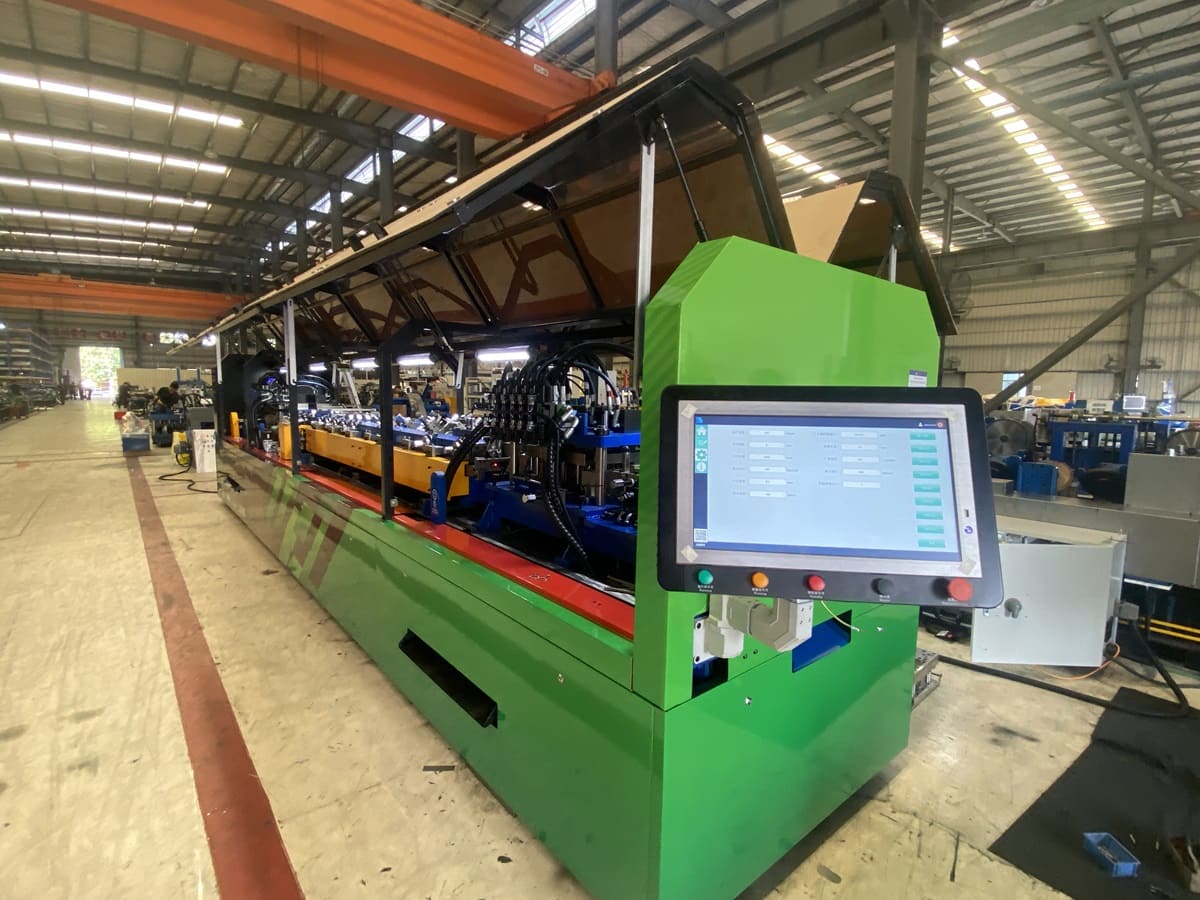
A standard light gauge steel framing machine is generally used to manufacture cold-formed steel members for residential framing, prefab houses, modular units, and related applications.
A heavy duty light steel framing machine is designed to process a broader range of structural sections or thicker materials, depending on the equipment configuration.
Both machine types use cold roll forming technology, but their capacity and intended product range can differ considerably.
Standard Light Steel Frame Machines
A standard light steel frame machine may be suitable for:
- Residential wall framing
- Prefabricated housing
- Steel villa construction
- Roof truss members
- Standard wall panel manufacturing
- Selected modular building applications
These machines can be particularly effective when the factory produces relatively lightweight framing sections and requires repeatable production.
Heavy Duty LGS Machines
A heavy duty LGS machine may be suitable for:
- Larger structural framing sections
- Heavier wall members
- Engineered floor joists
- Selected multi-storey framing applications
- Light commercial structures
- Projects requiring thicker steel materials
However, machine forming capacity alone does not establish that a particular building can be constructed safely. The number of storeys and structural applications depend on the approved engineering design and applicable building regulations.

Why One Machine Category May Not Cover Every Project
A factory may begin with standard residential steel framing and later receive inquiries for larger structural components.
This creates a common production challenge.
A standard light steel frame roll forming machine may provide excellent efficiency for relatively small steel sections but may not support the larger sections or heavier material required for other projects.
Conversely, a heavy duty steel frame machine may be designed around larger structural profiles and may not produce all the smaller profiles required by a residential framing business.
For factories serving different customer groups, using complementary machine categories can provide more complete product coverage.
Comparing Standard and Heavy Duty LGS Machines
| Evaluation Factor | Standard LGS Machine | Heavy Duty LGS Machine |
|---|---|---|
| Typical production focus | Residential framing | Larger structural framing |
| Steel thickness | Generally lighter ranges | Generally heavier ranges |
| Profile dimensions | Often smaller sections | Often larger sections |
| Wall framing | Common application | Application dependent |
| Floor joist production | Selected configurations | Common in suitable configurations |
| Roof truss components | Common application | Application dependent |
| Factory requirements | Depends on model | May require more demanding handling |
| Main purchasing consideration | Efficient matching of standard profiles | Structural section and material capacity |
Neither category is automatically superior.
A suitable machine is the one that meets the required manufacturing specifications without introducing unnecessary production complexity.
Frametec Machine Options for Different Structural Applications
Frametec provides multiple light gauge steel framing machine configurations for different structural and production requirements.
Standard Residential Production: SFS-C89 Series
The SFS-C89-1.2 light gauge steel framing machine is positioned for residential framing and related applications.
The published material thickness range is 0.75–1.2 mm.
This type of equipment may be suitable for manufacturers focusing on standardized light steel framing products and residential construction systems.
Flexible Residential Production: SFS-CC75-200
The SFS-CC75-200 multi profile steel framing machine supports section dimensions from 75 to 200 mm and material thicknesses from 0.75 to 1.6 mm.
It is relevant to businesses requiring flexible residential framing and compatible CC or CU structural connection systems.
Wall and Floor Production: SFS-CU140-305
The SFS-CU140-305 light gauge steel machine is designed for larger C and U framing sections.
Its published profile range is 135–305 mm, with a material thickness range of 1.0–2.5 mm.
This makes it relevant to manufacturers requiring broader wall and floor joist production capability.
Heavy Duty Structural Production: SFS-CC89-305T
The SFS-CC89-305T automatic multi profile LGS machine supports sections from 89 to 305 mm with steel thicknesses from 1.0 to 2.5 mm.
It is positioned for more demanding wall and floor framing applications, including residential and light commercial construction.
Larger Structural Sections: SFS-CC150-450
The SFS-CC150-450 heavy duty multi profile LGS machine has a published profile range of 150–450 mm and a material thickness range of 1.0–3.0 mm.
This wider section and thickness capacity makes it relevant to factories considering larger structural members and more demanding building applications.
These machines illustrate how different forming capacities can serve different parts of a steel framing manufacturer’s product portfolio.
How to Organize Standard and Heavy Duty Production
A factory considering both standard and heavy duty steel framing machines should organize its production according to actual orders and material requirements.
Production Line A: Residential and Standard Framing
This line may focus on:
- Standard wall studs
- Residential tracks
- Prefabricated house framing
- Steel villa components
- Roof framing members
- Repetitive light steel sections
The goal is consistent quality, efficient material handling, and reliable production of common residential profiles.
Production Line B: Heavy Structural Framing
This line may focus on:
- Larger structural wall sections
- Thicker cold-formed steel profiles
- Engineered floor joists
- Structural framing for selected commercial applications
- Specialized larger framing members
The goal is to provide the additional forming capacity and tooling required for more demanding products.
When these two production lines are planned together, manufacturers can potentially serve more customer requirements without depending on one machine to perform every task.
Five Business Advantages of a Complementary Machine Strategy
1. Broader Customer Coverage
Different customers require different framing products.
A factory with both standard and heavy duty LGS machine capabilities may serve residential builders, prefab manufacturers, modular construction companies, and selected commercial framing projects.
2. Better Production Allocation
Smaller residential profiles can be assigned to the most suitable equipment, while larger structural sections are produced on machines designed for heavier applications.
This can reduce unnecessary machine changeovers and improve production scheduling.
3. Improved Capacity Planning
Separate machine categories can allow different customer orders to be manufactured simultaneously.
However, actual throughput depends on order volume, material supply, staffing, and the equipment’s production characteristics.
4. Greater Product Diversification
A factory supplying only standard wall studs may have a relatively narrow product range.
Adding heavy duty steel framing capability can create opportunities to manufacture larger wall sections, engineered floor members, and additional structural products.
5. Long-Term Business Development
A complementary product strategy provides an expansion path as the factory’s customer base changes.
Rather than replacing its existing residential framing equipment, a manufacturer may add specialized machines that provide capabilities not available on the original production line.
What Should Manufacturers Consider Before Adding a Heavy Duty LGS Machine?
A heavy duty steel frame machine should be selected based on confirmed manufacturing requirements, not simply because it has a larger maximum thickness.
Profile Dimensions
The machine must support the required web widths, flange dimensions, lip geometry, and section configurations.
Material Specifications
Manufacturers should verify steel thickness, grade, coating, yield strength, and forming characteristics.
Forming and Punching Capacity
Larger sections and thicker materials may require different tooling, punching force, and forming arrangements.
Production Volume
A factory should determine whether heavier structural products will generate sufficient production demand to justify additional equipment.
Factory Infrastructure
Equipment layout, loading access, steel coil handling, power requirements, finished material storage, and safety arrangements should be reviewed.
CNC and Engineering Workflow
Both standard and heavy duty production lines should fit the factory’s design, manufacturing, and component identification process.
Quality Control
Manufacturers should establish inspection procedures for section dimensions, material thickness, hole positions, surface condition, and other required characteristics.
Example: Expanding a Residential Steel Framing Factory
Consider a hypothetical factory that currently manufactures wall frames and roof truss members for low-rise residential projects.
The factory operates a standard light steel frame machine and has established relationships with residential builders.
Over time, some customers begin requesting larger wall sections and engineered floor framing packages.
Instead of replacing the original machine, the manufacturer evaluates adding a heavy duty multi profile LGS machine.
This could allow the factory to continue producing standard wall framing on its existing line while using the new machine for larger structural sections.
The benefits depend on whether sufficient customer demand exists and whether the new equipment matches the required engineering specifications.
This approach illustrates how complementary machine capabilities can support business expansion without abandoning established production operations.
Standard and Heavy Duty Production for Different Export Markets
Export-oriented steel framing manufacturers may encounter different structural design practices and product requirements.
For example, buyers in Europe, North America, and South America may use different construction standards, preferred section dimensions, steel grades, and assembly methods.
A factory with a broader machine range may be better positioned to respond to varied customer specifications.
However, local engineering and construction compliance must be evaluated separately for each target market.
A machine capable of producing a particular steel profile does not automatically establish compliance with European, American, Canadian, or South American building codes.
How Frametec Supports Different Manufacturing Requirements
Frametec’s light gauge steel framing machine portfolio includes equipment for standard residential framing, multi-profile production, wall and floor systems, and heavy duty structural applications.
This allows manufacturers to compare machines according to their intended products rather than treating all LGS roll forming equipment as equivalent.
For buyers planning factory expansion, the most useful starting point is a detailed review of required sections, structural applications, production volumes, and existing equipment.
Frequently Asked Questions
1. What is the difference between a standard LGS machine and a heavy duty LGS machine?
The main difference is the range of steel sections and materials the machines are designed to process.
A standard light steel frame machine generally focuses on lighter framing applications, while a heavy duty LGS machine may support larger profiles and thicker steel. Buyers should compare actual forming specifications because the distinction varies between manufacturers.
2. Should a factory purchase both standard and heavy duty steel framing machines?
Not every factory needs both.
A business focusing exclusively on standardized residential framing may operate efficiently with standard equipment. However, a manufacturer regularly receiving orders for different framing sizes, heavier materials, and larger structural sections may benefit from complementary production lines.
3. Can a heavy duty LGS machine also manufacture standard residential steel framing profiles?
Possibly, but not in every case.
Heavy duty machines have minimum and maximum section dimensions and material thickness limitations. If the machine’s minimum section size is larger than the required residential profile, it cannot replace the standard forming equipment for that product.
4. Why do manufacturers use multi profile LGS machines instead of several fixed-profile machines?
Multi-profile machines allow different compatible sections to be manufactured using one production system.
This can reduce the need for separate machines when production involves many section sizes. However, dedicated fixed-profile machines may still be preferable for high-volume continuous production where several products must be manufactured simultaneously.
5. What thickness range should a heavy duty steel framing machine support?
The required thickness range depends on the structural sections the factory intends to manufacture.
For example, Frametec’s SFS-CC89-305T has a published thickness capacity of 1.0–2.5 mm, while the SFS-CC150-450 is listed for 1.0–3.0 mm material. Buyers should confirm the permitted thickness range for each specific profile and steel grade.
6. Are heavy duty steel framing machines suitable for multi-storey buildings?
Heavy duty machines can manufacture structural members intended for certain multi-storey building applications.
However, the suitability of those members depends on the building’s structural design, load conditions, connections, bracing, and applicable regulations. The machine’s advertised building application range should not be treated as an independent structural approval.
7. Can standard and heavy duty machines use the same design software?
They may use compatible design workflows, but compatibility should be verified for each machine.
Manufacturers should confirm supported file formats, CNC post-processors, tooling definitions, section libraries, and software versions. Two machines using similar design software may still require different production settings and output files.
8. What is the best way to expand from residential framing into floor joist production?
The first step is to identify the required floor joist section sizes, thicknesses, steel grades, and punching details.
The manufacturer can then determine whether its existing multi profile LGS machine supports those members. If the required sections exceed the existing machine’s capability, a specialized floor joist machine or heavy duty light gauge steel framing machine may be appropriate.
9. Is a heavy duty LGS machine more productive than a standard light steel frame machine?
Not necessarily.
Heavy-duty capability describes the machine’s forming range, not guaranteed production efficiency. A standard framing machine may produce lightweight residential components very efficiently, while a heavy-duty machine may be better suited to larger sections. Effective productivity depends on the specific job, setup, material, punching requirements, and operating conditions.
10. How should a factory compare standard and heavy duty LGS machine investments?
The comparison should consider actual product demand, section range, material requirements, production capacity, changeover time, equipment utilization, and ongoing operating costs.
A machine that closely matches the factory’s recurring orders may provide better practical value than one with unused capacity. Manufacturers should also evaluate future customer demand and the availability of technical support.
11. Do standard and heavy duty steel framing machines require different operator training?
Both machine categories require appropriate operator training, and additional training may be necessary for machines with more complex forming and tooling arrangements.
Operators should understand material handling, machine setup, CNC operation, tooling inspection, quality control, and safety procedures. Training requirements should be confirmed with the equipment supplier.
12. How can Frametec help manufacturers plan a broader light steel framing product range?
Frametec offers multiple light steel frame machine configurations for residential framing, multi-profile manufacturing, engineered floor systems, and heavier structural applications.
Manufacturers can provide profile drawings, material specifications, building applications, and production targets so that suitable machine options can be evaluated.
Explore the Frametec light steel frame machine product category for available equipment configurations.
Standard and heavy duty LGS machines serve different but complementary roles in modern light gauge steel framing production.
A standard light steel frame machine can provide efficient manufacturing for common residential components, while a heavy duty steel framing machine can expand production capabilities into larger structural sections and thicker materials.
For factories seeking broader product coverage, combining these machine categories within a coordinated production strategy can create opportunities in residential housing, steel villas, modular construction, floor systems, and selected commercial framing applications.
The best equipment strategy is not to select the largest machine available, but to build a production system that matches current engineering requirements and realistic future business demand.