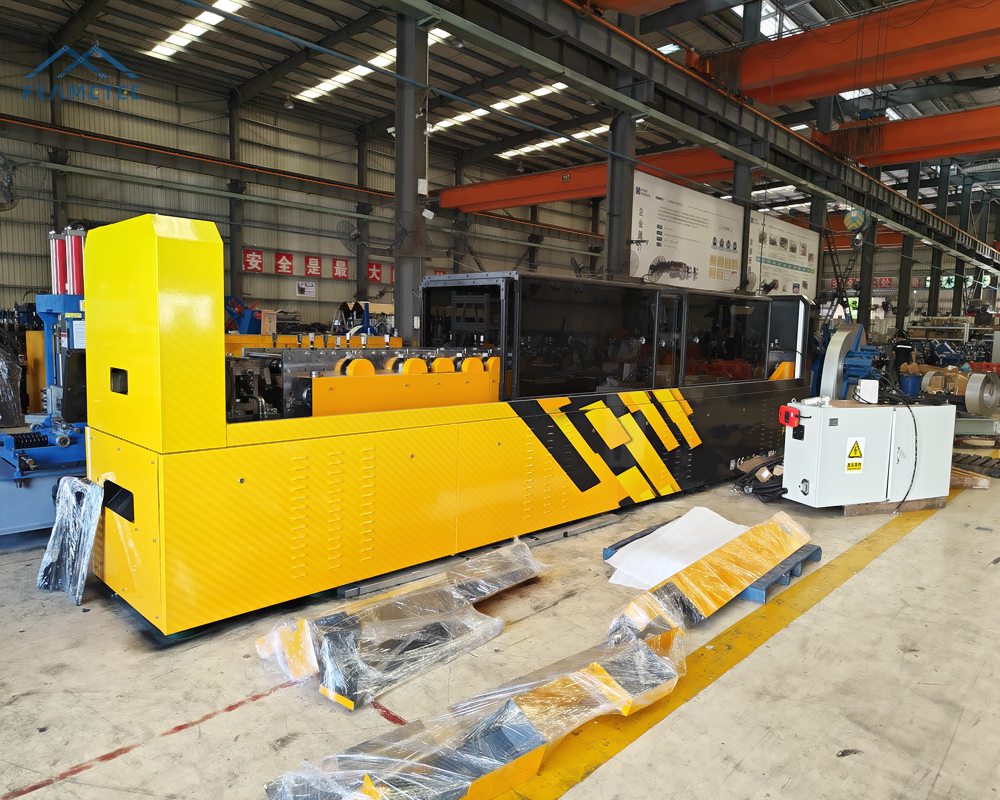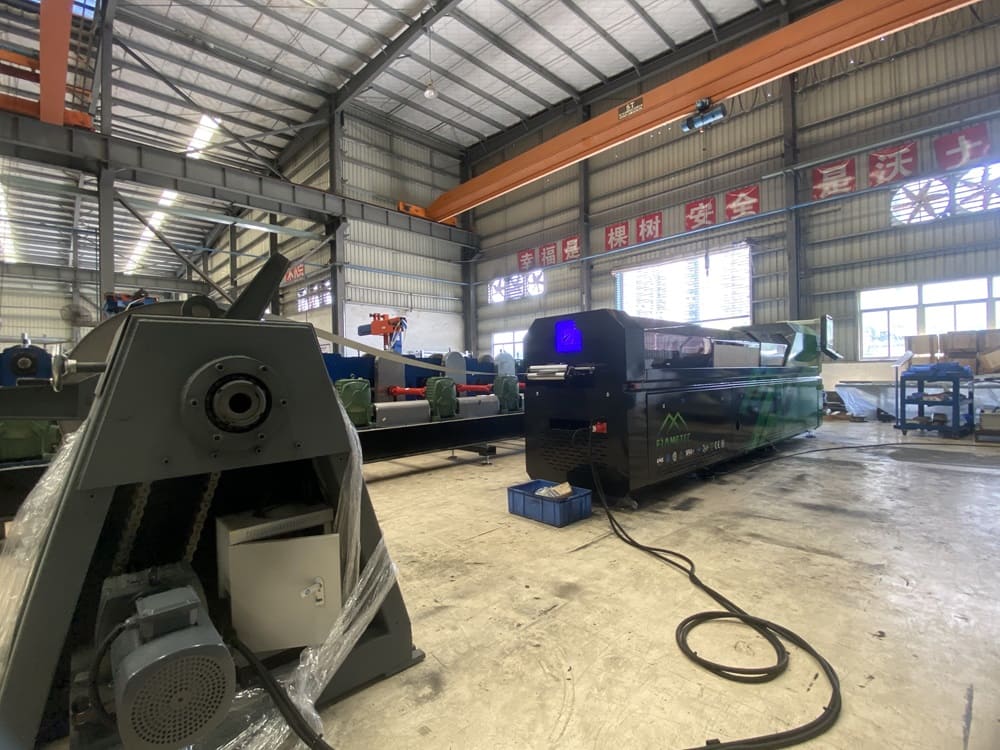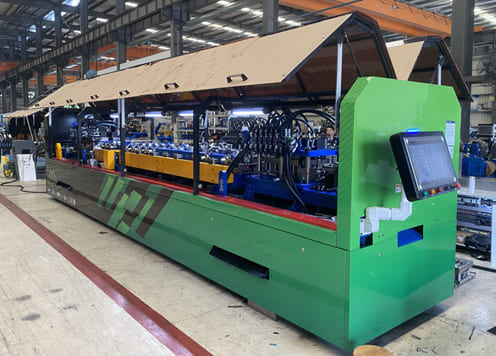
A complete light steel framing production line is not limited to one roll forming machine. It is a broader manufacturing system that connects design, material processing, structural component production, and assembly preparation into one coordinated workflow.
For companies entering the light gauge steel framing industry, understanding what a full production line includes is important because the value of the system does not come from a single machine alone. It comes from how different parts of the process work together.
A Production Line Is More Than a Machine
In many early-stage discussions, buyers focus mainly on the forming machine itself. This is understandable because the machine is the most visible part of the investment. However, modern framing production depends on a wider structure that includes:
- profile production capability
- software-supported design workflow
- material suitability
- punching and cutting functions
- different framing applications
- production planning for wall, floor, and roof components
A company that only looks at the machine as isolated equipment may miss the broader logic of industrialized framing production.
Core Elements of a Complete Light Steel Framing Production Line
Design and Engineering Input
The production process often starts with project design. Structural layouts, profile requirements, and production details must be translated into manufacturing instructions. This is one of the reasons why software compatibility matters in light steel framing systems.
The better the connection between design and production, the more efficient the workflow becomes.
Material Preparation
A complete production line begins with appropriate steel coil input. Material thickness, width, and grade must match the framing requirements of the target project.
This stage affects:
- profile performance
- structural suitability
- machine compatibility
- long-term production consistency
Main Framing Machine
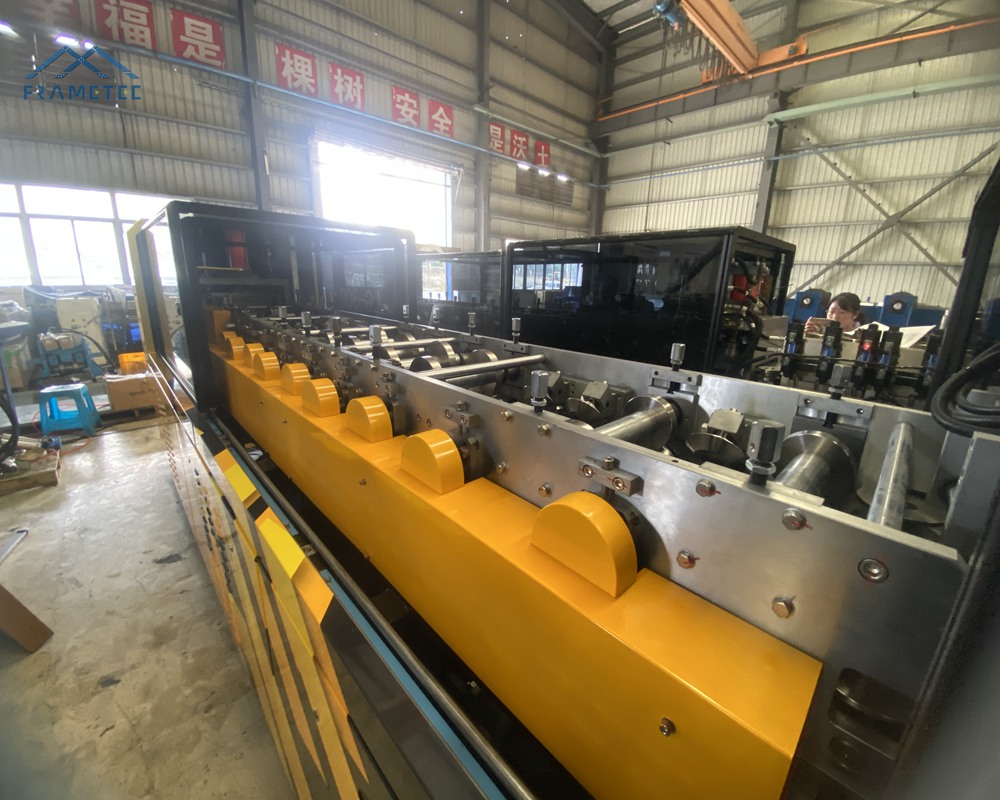
The main framing machine is the center of the line. Depending on the application, this machine may focus on:
- wall framing
- multi-profile structural framing
- floor joist production
- heavier-duty framing for broader structural use
The exact machine type depends on whether the business focuses on residential framing, modular construction, floor systems, or larger structural applications.
Punching, Cutting, and Forming Functions
A full framing line typically includes integrated processing functions that allow components to be produced in a more assembly-ready condition.
These functions improve:
- dimensional consistency
- production speed
- downstream efficiency
- repeatability across projects
Floor and Structural Support Production
In many businesses, a complete production line does not stop at wall framing. It may also include floor joist production, truss-related framing, or other structural members that expand the application range of the factory.
This is especially relevant for:
- modular building manufacturers
- prefab villa producers
- off-site construction companies
- light commercial framing suppliers
Assembly and Packaging Preparation
The final stage of a production line is not just “finished profile output.” In practical factory operation, the process also includes preparation for packaging, identification, sorting, and delivery into a broader assembly workflow.
This matters because the machine creates more value when its output fits naturally into construction or prefab assembly systems.
How This Fits Different Business Types
For residential framing manufacturers
The production line may focus mainly on wall framing and standard structural members.
For modular building companies
The line often expands into floor systems, more profile flexibility, and better coordination between different framing sections.
For growing prefab factories
A more complete line allows the business to move beyond simple profile production and into integrated framing supply.
A complete light steel framing production line includes much more than one machine. It is a coordinated system that brings together design logic, material processing, framing output, and application-specific production capability.
For manufacturers that want to build a long-term framing business, understanding the full production line is essential. It helps them move from machine purchasing to production system planning.
FAQ
What is considered a complete light steel framing production line?
A complete production line includes the broader workflow around framing production, not only the main roll forming machine. It usually involves design input, steel material preparation, forming, punching, cutting, and in many cases support for multiple framing applications such as walls, floors, and roof-related members.
Does a complete production line always include floor joist production?
Not always. Some businesses focus mainly on wall framing, while others need wider capability. For modular and off-site construction, floor joist production often becomes a more important part of the overall line.
Why is software compatibility important in a framing production line?
Because modern framing production often starts with digital design. The production line works more efficiently when the design data can move smoothly into machine-supported manufacturing without excessive manual adjustment.
Can one production line support both residential and modular projects?
In many cases, yes, especially if the machine configuration is flexible enough. However, the exact range depends on the machine type, profile capability, and whether floor or heavier structural systems are part of the production plan.
Is a complete production line only for large factories?
No. Even smaller factories benefit from understanding the full workflow. A complete production line does not necessarily mean a very large plant. It means a production system designed with logic and coordination.
What is the main advantage of thinking in terms of a production line instead of one machine?
The main advantage is that it helps the buyer and manufacturer focus on output, application, and workflow instead of only equipment. This leads to better planning and stronger long-term production capability.
Can a company start with a smaller line and expand later?
Yes. Many businesses start with a core framing machine and then expand as project range increases. The important point is to choose a direction that does not block future growth too early.
How does a complete framing production line help prefab construction?
It improves consistency, production planning, and coordination between different framing elements. This is especially valuable in modular and off-site construction where repeatability matters.
Related Articles
What Is a Complete LGS Production System
How Light Steel Framing Machines Support Modern Prefab and Off-Site Construction
LGS Machines for Modular Building Manufacturers