
For investors and construction companies entering the Australian market, one key question defines the decision:
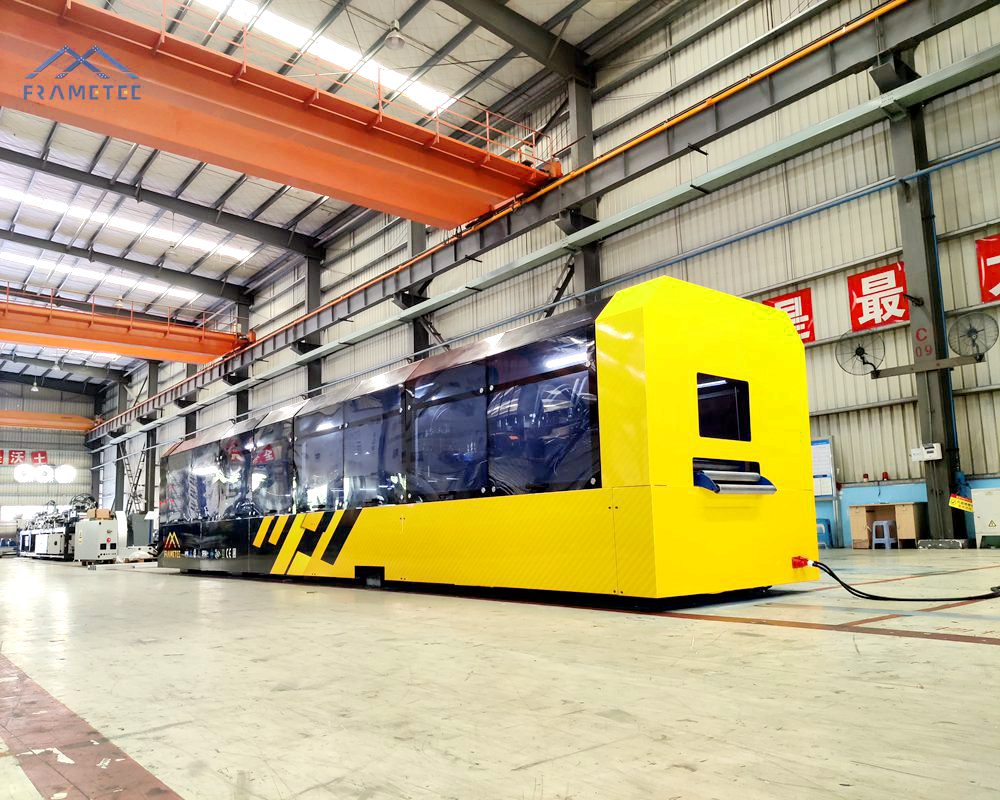
What is the return on investment (ROI) of a light steel frame (LGS) machine?
Compared with traditional construction equipment, LGS machines offer a unique advantage:
they are not only production tools, but also the foundation of a scalable construction business model.
Why ROI Is Strong in Australia
Australia provides a favorable environment for LGS investment due to:
- High labor costs in construction
- Strong demand for prefabricated housing
- Strict building standards requiring precision
- Ongoing shift from timber framing to steel systems
In practical terms, this means:
automation replaces labor, and efficiency directly improves profit margins
Typical Investment Cost
A standard LGS setup in Australia includes:
| Item | Estimated Cost |
|---|---|
| LGS machine | $55,000 – $150,000 |
| Factory setup | $10,000 – $30,000 |
| Initial steel coil stock | $20,000 – $50,000 |
| Software & training | $5,000 – $15,000 |
Total investment: approximately $120,000 – $250,000
Revenue and Profit Model
In the Australian market, LGS businesses typically operate on a frame supply model.
Revenue per project:
- Steel frame supply per house: $5,000 – $10,000
Profit margin:
- 25% – 40%
Profit per project:
- $2,000 – $4,000
This model is widely used by prefab suppliers and steel framing contractors.
Break-Even Calculation
Based on different profit levels:
Conservative scenario
- Profit per project: $2,000
- Break-even: 60–75 houses
Moderate scenario
- Profit per project: $3,000
- Break-even: 40–50 houses
Optimized scenario
- Profit per project: $4,000
- Break-even: 30–40 houses
Payback Period
The return period depends primarily on production volume.
| Monthly Output | Payback Time |
|---|---|
| 8–10 houses/month | 6–9 months |
| 5–7 houses/month | 9–12 months |
| 3–5 houses/month | 12–18 months |
This aligns with most real-world cases in the Australian prefab sector.
Key Drivers of ROI
1. Labor Cost Reduction
Automation significantly reduces manual work, which is the largest cost component in Australia.
2. Faster Project Delivery
Prefabrication shortens construction timelines, allowing more projects per year.
3. Consistent Production Quality
Precision manufacturing reduces rework and material waste.
4. Premium Market Position
Steel framing is valued for:
- durability
- termite resistance
- fire performance
This supports higher selling prices compared to traditional timber framing.
Steel vs Timber: ROI Perspective
| Factor | Steel Framing | Timber |
|---|---|---|
| Labor dependency | Low | High |
| Construction speed | Fast | Moderate |
| Maintenance cost | Low | Higher |
| Long-term ROI | Higher | Lower |
While timber may have a lower initial cost, steel framing provides stronger long-term returns.
Factors That Influence ROI
Several variables can affect investment performance:
- Production volume
- Machine configuration and automation level
- Local market demand
- Sales and customer acquisition capability
A well-positioned business with stable project flow can significantly shorten the payback period.
Why Machine Selection Matters
The choice of machine directly impacts ROI.
Lower-cost machines:
- Limited profile range
- Lower efficiency
- Higher labor dependency
Advanced systems:
- Multi-profile capability
- Higher production speed
- Full software integration
These features improve productivity and allow the business to handle a wider range of projects.
FAQ
Is an LGS business profitable in Australia?
Yes. The combination of high labor costs and strong prefab demand creates a favorable profit environment.
How long does it take to recover the investment?
Typically between 6 and 18 months, depending on production volume and market conditions.
What is the biggest factor affecting ROI?
Production volume and labor cost savings are the most important factors.
Is LGS better than timber from an investment perspective?
For long-term scalability and efficiency, steel framing generally offers better returns.
An LGS machine is not simply a piece of equipment.
It is a production system that enables a more efficient and scalable construction model.
In Australia, where labor costs are high and construction demand is strong,
a properly configured LGS business can achieve a relatively fast and stable return on investment.