
Starting a light steel frame (LGS) business in Australia is becoming one of the most attractive opportunities in the construction industry.
With rising labor costs, increasing housing demand, and a shift away from traditional timber construction, more entrepreneurs and construction companies are investing in light gauge steel framing systems.
This guide explains exactly how to start an LGS business in Australia—from planning to production.
AU Why Start an LGS Business in Australia?
Australia is one of the most profitable markets for LGS construction.
Key reasons:
- High labor costs → strong demand for automation
- Fast-growing prefab housing market
- Strict building standards → preference for precision systems
- Increasing replacement of timber with steel
In short:
High cost of labor = opportunity for machine-based production
Step 1: Understand the LGS Business Model
Before investing, you need to know how money is made.
Two main models:
1️⃣ Manufacturing + Supply
You produce steel frames and sell to builders
2️⃣ Full Project Solution
You produce + design + install prefab buildings
Most beginners start with manufacturing only, then expand.
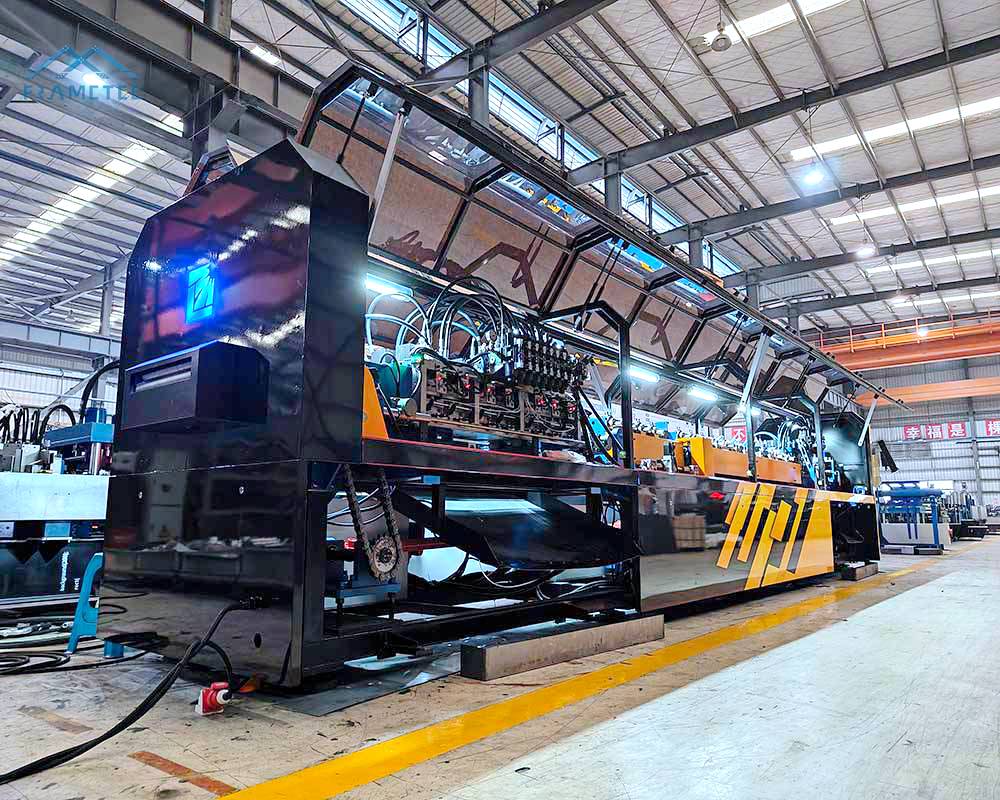
Step 2: Choose the Right LGS Machine
Your machine determines your business capability.
Recommended setup:
- Multi-profile light steel frame machine
- Thickness range: 0.75–2.5 mm
- Integrated punching system
- Software compatibility (Vertex / FrameCAD type)
This allows you to handle:
- Wall frames
- Roof trusses
- Floor systems
Step 3: Investment Breakdown
Here’s a realistic startup budget:
| Item | Estimated Cost |
|---|---|
| LGS machine | $60,000 – $150,000 |
| Steel coil inventory | $20,000 – $50,000 |
| Factory rent & setup | $10,000 – $30,000 |
| Software & training | $5,000 – $15,000 |
Total investment:
$100,000 – $250,000
Step 4: Set Up Your Factory
Basic requirements:
- Space: 200–500 m²
- Power supply: stable industrial electricity
- Material storage area
- Finished product area
You don’t need a huge factory—
efficiency matters more than size
Step 5: Use Design Software
In Australia, most projects rely on:
- Vertex BD
- FrameCAD-type software
These tools generate:
- Structural drawings
- CNC production files
Without software, you can’t scale.
Step 6: Build Your Supply Chain
You will need:
- Galvanized steel coil suppliers
- Logistics partners
- Local contractors/builders
Strong supply chain = stable production
Step 7: Get Your First Customers
This is where most people fail—but also where you win.
Proven channels:
- Local builders & developers
- Prefab housing companies
- Online marketing (Google / LinkedIn)
Offer:
- Fast delivery
- Competitive pricing
- Reliable quality
Step 8: Profit Model & ROI
Example:
- Frame supply per house: $5,000 – $10,000
- Production cost: ~60–70%
- Profit per project: $2,000 – $4,000
Break-even:
6–18 months
Challenges You Should Know
- Learning curve (software + production)
- Market competition
- Need for consistent quality
But once system is stable:
business becomes scalable and repeatable
Why Many Start with Frametec Machines
Frametec provides:
- Multi-profile LGS machines
- Software compatibility
- Global export experience
- Technical support & training
For new investors:
This reduces risk and shortens startup time.
FAQ
How much does it cost to start an LGS business in Australia?
Typically between $100,000 and $250,000 depending on scale.
Is LGS business profitable in Australia?
Yes. High labor costs make prefab steel construction highly competitive.
Do I need construction experience?
Not necessarily, but understanding design software and production is essential.
How long to start production?
Usually 1–2 months after machine installation.
Can one machine handle multiple projects?
Yes. Multi-profile machines support various building types.
Final Thoughts
Starting an LGS business in Australia is not just about entering construction—
It’s about entering a manufacturing-driven building industry.
With the right machine, system, and market strategy,
you’re not just building frames—
You’re building a scalable construction business.